Why Environmental Organizations Should Pursue UAP Disclosure
Submitted t0 the Montana Environmental Information Center
By Richard O’Connor, M.D.
For decades, organizations like the Montana Environmental Information Center (MEIC) have waged courageous legal and legislative battles against the coal and petroleum industries. MEIC’s attorneys have walked into courtrooms in Helena, MT and Washington, D.C., armed with scientific data, public trust doctrine arguments, and an abiding love for Montana’s rivers, skies, and communities. Those battles have mattered enormously, and the people who fought them deserve every ounce of credit we can give them.
But I want to ask a harder question — one that I believe every serious environmentalist needs to sit with: What if we are now spending our finite time, money, and political energy fighting the wrong war?
What if, while we are in court battling over the margins of coal ash regulations and natural gas pipeline permits, the key to ending the fossil fuel era entirely is locked away in a classified government vault — and has been for decades?
I am not speaking in metaphor. I am speaking about Unidentified Aerial Phenomena (aka UFOs), and about the extraordinary physics that a team of credentialed scientists has now published in a peer-reviewed journal. The numbers they have produced should stop every environmentalist cold.
The Day the Physics Changed
On November 14, 2004, the USS Princeton — a Ticonderoga-class guided missile cruiser equipped with one of the most sophisticated radar systems in the world, the SPY-1B — was conducting routine training exercises off the coast of Southern California with Carrier Strike Group Eleven, which included the nuclear aircraft carrier USS Nimitz. Over the preceding two weeks, Princeton’s radar operators had been tracking objects behaving in ways that defied any known explanation: objects appearing at altitudes of 80,000 feet or higher, then dropping to near sea level in seconds, with no sonic booms, no heat signatures, and no exhaust.
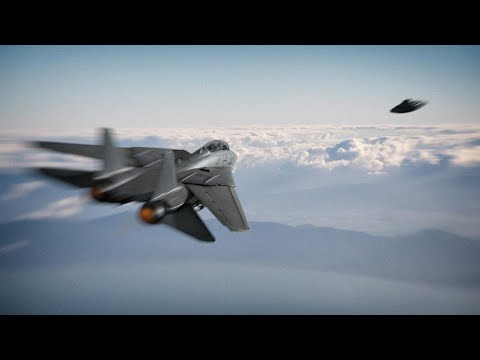
On that November morning, the objects returned. The Princeton’s radar tracked one of them drop from 28,000 feet to sea level — approximately five miles of altitude — in 0.78 seconds. That’s an average velocity of 24,475 mph. The ship’s captain ordered an intercept. Commander David Fravor and Lieutenant Commander Alex Dietrich of the U.S. Navy, both experienced combat aviators, were dispatched in F/A-18F Super Hornets. What they found hovering above a churning disturbance on the ocean surface was a smooth, white, wingless, cylindrical object roughly 40 feet long — approximately the size of an F/A-18 itself — with no visible flight control surfaces, no exhaust ports, no wings, and no discernible means of propulsion. The object accelerated away at a speed that Commander Fravor, with decades of military aviation experience, described as unlike anything he had ever seen.
A second pilot, Lieutenant Chad Underwood, captured a similar encounter on his aircraft’s Advanced Targeting Forward-Looking Infrared (ATFLIR) pod — footage that the U.S. Department of Defense officially declassified and authenticated in 2020. That video, which shows the object moving against the wind with no heat trail and no propulsion signature before abruptly departing the frame, is now part of the public record.
The incident would likely have remained a classified curiosity except for what came next: a group of credentialed scientists decided to do what scientists do. They ran the numbers.
The Physics No One Is Talking About
In 2019, Dr. Kevin H. Knuth, a professor of physics at the University at Albany (State University of New York) and former NASA research scientist, together with Robert M. Powell and Peter A. Reali of the Scientific Coalition for UAP Studies, published a paper titled “Estimating Flight Characteristics of Anomalous Unidentified Aerial Vehicles” in the peer-reviewed journal Entropy (Vol. 21, No. 10, 939). The paper is open access and freely available through the U.S. National Library of Medicine’s PubMed Central database.
Dr. Knuth and his colleagues did not speculate. They used established physics, conservative assumptions, and standard kinematic equations to calculate what the observed maneuvers of these objects would require in terms of acceleration and energy. The results are staggering.
The Tic Tac object tracked by the USS Princeton’s radar during its 0.78-second descent from 28,000 feet was calculated to have undergone an acceleration of approximately 5,880 times the force of Earth’s gravity — written as 5,880 g. For perspective, the human body begins to lose consciousness at approximately 5 g. The airframe of an advanced military fighter jet is stressed to withstand perhaps 9 g briefly. A conventional aircraft or missile subjected to 5,880 g would be reduced to fragments in an instant. The Tic Tac exhibited no such structural failure. It left no sonic boom. It left no heat signature commensurate with the energy its movement implied. It simply moved.
The authors of the paper went further. They estimated the peak power output required to execute maneuvers of this nature. Their calculations, accounting for a craft of the observed size, produced an estimated power output of approximately 1,100 billion watts for specific maneuvers — with other maneuver sequences requiring estimates that reach into the tens of thousands of billions of watts.
To grasp what that number means, consider this: a single household incandescent light bulb consumes 60 watts. A typical American home uses roughly 1,200 watts on average. The entire nuclear power generating capacity of the United States — every nuclear plant operating in this country — produces approximately 100 billion watts of electricity in total. But the comparison that should truly stop you cold is this: according to the U.S. Energy Information Administration, the total electricity-generating capacity of the United States from every source combined — every natural gas plant, every coal plant, every nuclear reactor, every wind turbine, every solar panel, every hydroelectric dam — amounts to approximately 1,190 billion watts. The power estimated for a single maneuver of a single craft the size of a fighter jet is nearly equal to the entire generating capacity of the United States of America. All of it. At once.
The paper’s conclusions are characteristically restrained in the way that good science demands. The authors write that the extreme estimated flight characteristics reveal that these observations are either fabricated or seriously in error, or that these craft exhibit technology far more advanced than any known craft on Earth. Given the weight of the witness testimony — which we will examine next — the authors favor the latter conclusion.
The Witnesses Are Not Cranks
Environmental advocates are accustomed to dealing with the credibility wars that industry wages against scientific witnesses. We know what it looks like when fossil fuel companies try to discredit researchers, and we know how important witness credibility is to every argument we make in court and in the legislature.
By any standard we would apply to testimony in an environmental proceeding, the witnesses to the 2004 Nimitz encounters are exceptionally credible.
Commander David Fravor retired from the U.S. Navy after 18 years of service, including combat deployments. He has spoken publicly and repeatedly about what he witnessed on November 14, 2004, describing an object that appeared to react to his aircraft, mirroring his movements before departing at a speed he described as instantaneous compared to anything in his experience. Lieutenant Commander Alex Dietrich, his wingman that day, has provided independent corroborating testimony. Lieutenant Chad Underwood, who captured the FLIR video, has spoken in detail about the object’s failure to produce any heat signature in the infrared spectrum consistent with any known form of propulsion.
The radar operators aboard the USS Princeton had been tracking anomalous objects for approximately two weeks before the November 14 intercept. Senior Chief Operations Specialist Kevin Day, who has spoken publicly about his experience, tracked the objects on the Princeton’s SPY-1B radar over that extended period, watching them behave in ways that he could not reconcile with any known aircraft. The SPY-1B is not a consumer product. It is one of the most sophisticated phased-array radar systems in the U.S. military arsenal, designed specifically to discriminate real targets from noise and electronic countermeasures.
The encounter was cross-corroborated by multiple sensor platforms simultaneously: the Princeton’s surface radar, the airborne radar of an E-2C Hawkeye early warning aircraft, the F/A-18s’ onboard radar, and the ATFLIR infrared imaging system. Dr. Knuth and his colleagues note explicitly in their paper that they selected cases for analysis specifically because they involved multiple professional witnesses observing the UAV in multiple modalities — sight, radar, and infrared imaging simultaneously — making fabrication or simple misperception extraordinarily unlikely.
In December 2017, the New York Times broke the story of a classified Defense Department program called the Advanced Aerospace Threat Identification Program (AATIP), which had been studying UAP encounters in secret. This was followed in 2020 by the Pentagon’s official authentication of three UAP videos, including the Nimitz FLIR footage. In 2022, Congress established the All-domain Anomaly Resolution Office (AARO) specifically to investigate UAP incidents. In 2023 and 2024, multiple members of Congress held public hearings at which former military and intelligence officials testified under oath about the existence of UAP programs and, in the case of former intelligence official David Grusch, about alleged government possession of non-human craft, alien bodies (“biologics”), and materials.
We are not talking about fringe claims. We are talking about a subject that has moved into the domain of serious congressional oversight, peer-reviewed scientific literature, and authenticated Department of Defense documentation.
What This Means for the Planet
Now let us return to the question that ought to matter most to every person who reads this magazine.
The climate crisis is, at its foundation, an energy crisis. Everything we burn — coal, natural gas, oil — we burn because we need energy. We need energy to heat our homes, power our factories, run our transportation systems, and sustain our food supply. The fossil fuel industry does not survive because people love carbon emissions. It survives because it has, for over a century, offered the most energy-dense, transportable, and economically accessible fuel source humanity has possessed.
Everything MEIC does — every lawsuit, every legislative intervention, every public comment against a new mine or pipeline — is, at its core, an attempt to make fossil fuels more expensive and more difficult to develop, in the hope that we can hold back the tide long enough for alternatives to become economically viable. It is important work. It is necessary work.
But it is also, increasingly, a rearguard action. The fossil fuel industry has resources that dwarf those of every environmental organization in Montana combined. Every courtroom victory we achieve is met by industry with an appeal, a regulatory workaround, or a lobbying campaign in the next legislative session. We win battles. The planet keeps warming.
Now consider the possibility — seriously, soberly, as the scientists are beginning to do — that there are craft flying through our skies that are generating power on the order of 1,100 billion watts from a propulsion system that leaves no exhaust, no heat dump, and no sonic boom. Whatever is powering those objects, it is clearly not combustion. It is not nuclear fission in any configuration we understand. It is, based on the physics, something categorically beyond our current technological vocabulary.
If that technology could be (or currently is) understood — even partially — it would represent the most significant scientific and engineering development in the history of our species. A propulsion and energy system that can produce thousands of billions of watts from an object the size of a small aircraft, with zero detectable emissions, would make every coal plant, every gas well, every oil pipeline as obsolete as the horse and buggy. Not marginally cleaner. Not incrementally more efficient. Obsolete.
The fossil fuel industry would not survive contact with such technology. MEIC would not need to fight any more pipeline battles. Montana’s rivers and skies would not need defending from extraction industries that would simply have no customers.
The Argument for a Strategic Pivot
I am not suggesting that MEIC shut down its legal operations tomorrow. I am suggesting that the organization, and the broader environmental movement, needs to begin treating UAP disclosure as an environmental issue — because it is, potentially, the most consequential environmental issue of our time.
What would that look like in practice?
It would mean demanding, in MEIC’s public communications and legislative advocacy, that the U.S. government fully disclose what it knows about UAP propulsion systems. It would mean joining the growing chorus of voices — including members of Congress from both parties — calling for the release of classified materials related to UAP technology. It would mean funding or supporting scientific research, like the work of Dr. Knuth and his colleagues, that takes this subject seriously as a matter of physics rather than folklore.
It would mean recognizing that the peer-reviewed science already exists. Dr. Knuth’s paper is not a speculative document. It is a careful application of Newtonian mechanics to observed data, published in a legitimate scientific journal, indexed in the National Library of Medicine, and freely available for anyone to read. The paper concludes that these craft exhibit technology far more advanced than anything on Earth, and it invites the scientific community to take that conclusion seriously.
It would mean having the intellectual courage to say, publicly, what the physics implies: that somewhere — whether in classified government archives, in the hands of private defense contractors, or in the materials that witnesses like David Grusch have described under oath — there may exist evidence of energy and propulsion technology that could, if disclosed and made available to scientists, end the fossil fuel era within a generation.
Environmental organizations are not strangers to courage. MEIC has taken on coal companies, oil pipelines, and hostile state legislatures with limited resources and enormous tenacity. That same tenacity, directed at the question of what our government knows about non-human technology and energy systems, could open a door that no amount of courtroom litigation has ever been able to open.
A Word About Credibility
I anticipate the objection. It goes like this: If MEIC starts talking about UFOs, we will lose credibility with the policymakers, judges, and journalists we need to take us seriously on climate and environmental issues.
This objection deserves a direct answer.
Fifteen years ago, the suggestion that UAP should be taken seriously as a scientific subject would have been professionally risky for any credentialed researcher. Today, a professor of physics at a State University of New York campus has published peer-reviewed work on the subject. The House Committee on Oversight has held multiple hearings. The Pentagon has authenticated video footage. Former senior intelligence officials have testified under oath. The American Institute of Aeronautics and Astronautics has begun issuing statements acknowledging the scientific significance of the data.
The credibility risk has changed. What would have seemed eccentric in 2005 is, in 2026, a matter of active congressional investigation and published scientific literature. The question is no longer whether UAP are real. The Pentagon has told us they are real. The question is what they are and — critically — what they can teach us.
An environmental organization that says, clearly and soberly, “We believe that the peer-reviewed scientific evidence regarding UAP flight characteristics demands that our government disclose what it knows about these propulsion systems, because that knowledge may be the key to ending the fossil fuel era” is not making a fringe argument. It is making a logical argument, grounded in published physics, from a position of principled advocacy for the planet.
That is exactly what MEIC has always done.
Montana Is Already in the Crosshairs — And the Government Knows It
There is one more dimension of this story that belongs in any honest conversation about Montana’s environment, and it is perhaps the most sobering of all.
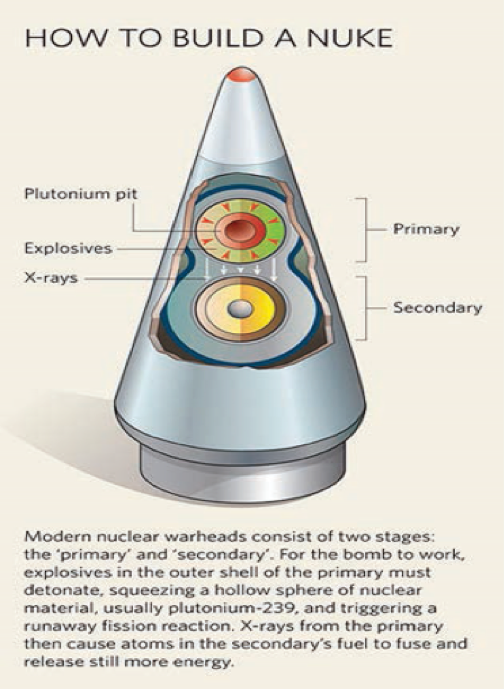
Malmstrom Air Force Base, located just outside Great Falls, is home to the 341st Missile Wing, which operates and maintains approximately 150 Minuteman III intercontinental ballistic missiles dispersed in silos across a vast swath of the Montana plains — in Cascade, Fergus, Judith Basin, Meagher, Wheatland, Golden Valley, and Musselshell counties, among others. These weapons, each carrying a nuclear warhead of enormous destructive power, make Montana one of the most strategically significant — and strategically targeted — pieces of real estate on the planet. If the United States and Russia or China were ever to exchange nuclear strikes, Montana would not be a bystander. It would be among the first places on Earth to be hit, and hit repeatedly.
Every river MEIC has defended, every wilderness it has protected, every community it has helped shield from toxic contamination — all of it exists within the blast and fallout radius of what would happen to this state in a nuclear exchange. Environmental law, however well crafted, offers no protection against a 300-kiloton warhead. This is the ultimate threat to Montana’s environment, and it is one that almost no environmental organization in the country is talking about in connection with UAP.
They should be. Because UAP have a documented history of showing up at Malmstrom — and they have not been friendly to the missiles.
In March 1967, then-Lieutenant Robert Salas was on duty as a deputy missile combat crew commander, stationed 60 feet underground in a launch control facility at Malmstrom AFB. In the early morning hours, his flight security controller called from the surface, reporting strange lights in the sky making maneuvers no known aircraft could perform — stopping on a dime, reversing course, moving in total silence. Salas told him to keep watch. Minutes later, the controller called again, his voice frantic: a large, glowing, pulsating red oval-shaped object, roughly 30 to 40 feet in diameter, was hovering directly over the facility’s front gate. Guards had drawn their weapons. Salas woke his commanding officer. And then, one by one, alarms began flashing on the launch control console. All ten of the nuclear-armed Minuteman ICBMs under the facility’s control went to a “no-go” status — unable to launch.
Eight days earlier, on March 16, an almost identical event had occurred at another Malmstrom launch control facility — Echo Flight — where ten more missiles had simultaneously gone offline while security personnel reported a UAP hovering directly above one of the launch sites. In total, at least twenty nuclear-armed missiles under Malmstrom’s control were disabled during a roughly two-week period in March 1967, coinciding directly with documented UAP sightings at the facilities.
The Air Force investigated. The Boeing company, which manufactured the Minuteman systems, was brought in to determine what had caused the shutdowns. Their conclusion, according to subsequent accounts, was that the guidance and control systems (“logic couplers”) had been disrupted by an external electromagnetic signal — one that had penetrated deep underground through jamming systems designed to prevent exactly that kind of intrusion. No official report was published , nor was any conventional explanation ever publicly confirmed. Salas and other personnel were ordered by Air Force investigators to sign non-disclosure agreements and never speak of the incidents. Salas honored that silence for nearly thirty years, finally breaking it in 1996 after discovering a published reference to the incidents in a UFO research book. He has since testified publicly before Congress, signed sworn affidavits, and written three books on the subject.
Salas is not alone. Captain David Schindele was a Minuteman ICBM launch crew commander and deputy commander stationed at Minot Air Force Base in North Dakota in September 1966 — just months before the Malmstrom incidents. On his very first duty shift at a launch control facility near Mohall, he was met by security personnel who described an object, estimated to be 80 to 100 feet wide, with bright flashing lights, that had hovered just outside the perimeter fence during the night. Every one of the ten nuclear missiles at that facility had been taken offline while the object was present. Schindele and everyone who witnessed the event were told, in no uncertain terms, that it had never happened — that they were never to speak of it. He carried that secret for nearly forty years. He has since written a book titled It Never Happened, Volume 1: U.S. Air Force UFO Cover-up Revealed and has testified at public forums including the Citizens Hearing on UFO Disclosure held at the National Press Club in Washington, D.C.
Former nuclear missile targeting officer Captain Robert Jamison, also stationed at Malmstrom in that period, independently corroborated the pattern. He was dispatched on one occasion to re-target missiles at the Oscar Flight launch facility that had inexplicably gone offline, only to learn upon arrival that the county sheriff had reported a UFO in the area at the same time the missiles failed. Jamison’s summary, offered at the 2021 National Press Club press conference alongside Salas and Schindele, was blunt: “Even though I never saw a flying saucer or a UFO, I do know they exist because they knocked down our missiles. That just doesn’t happen every day.”
The pattern of UAP incidents at nuclear weapons facilities is not limited to Montana and North Dakota in the 1960s. It stretches across decades and continents. Dr. James Lacatski, the Defense Intelligence Agency rocket scientist and intelligence analyst who designed and managed the U.S. government’s largest acknowledged UAP investigation program — the Advanced Aerospace Weapon System Applications Program, or AAWSAP — has stated publicly that UAP interventions at nuclear weapons facilities have occurred not once or twice, but “dozens of times”. He made that statement during an appearance on Weaponized, the investigative podcast hosted by filmmaker Jeremy Corbell and award-winning investigative journalist George Knapp. Almost none of these incidents have ever been officially disclosed to the public, precisely because they are classified. The men and women who witnessed them were ordered to silence.
What is the message in all of this? Captain Salas, who has thought about little else for thirty years, believes he knows. When asked at a congressional hearing what he thought the disabling of nuclear missiles was meant to communicate, he was direct: the visitors, in his view, were sending a message about nuclear weapons — a message that our most destructive technology is known to others, that it is being watched, and that its continued existence is, at minimum, a matter of concern to intelligences beyond our own.
Whether one accepts that interpretation or not, the environmental implications are stark, and they are entirely separate from any question about the origin of these craft. Montana’s Minuteman missiles are, today, primary targets for any adversary contemplating a first strike against U.S. nuclear capabilities. If those missiles were ever to become the aiming targets for Russian or Chinese ICBMs — and military planners on all sides agree that they would be — the environmental devastation visited upon Montana would be devastating and permanent. The rivers, the wilderness areas, the air quality, the human communities that MEIC has spent decades protecting: all of it would cease to exist in any meaningful sense.
This threat is not on the radar of environmental organizations. It is not the subject of any lawsuit MEIC has filed, any legislative testimony it has delivered, or any public comment it has submitted. It is invisible to the environmental movement not because it is unreal, but because it is classified — because the government that controls these weapons has, for sixty years, refused to tell the public what it knows about the craft that have already demonstrated the ability to neutralize U.S. nuclear weapons.
That is the final argument for UAP disclosure as an environmental cause. It is not merely about clean energy, though the energy implications alone are transformative. It is about the survival of the place we are trying to protect. You cannot save Montana’s environment after it has been incinerated and made radioactive. And the only path to ensuring that it is not incinerated runs through a full, honest accounting of what our government knows — about the weapons pointed at this state, about the craft that have already visited those weapons, and about the technology that may offer humanity a way out of the nuclear trap it has built for itself.
What You Can Do Right Now: Join the Fight for Disclosure
None of this will change on its own. Classified programs do not declassify themselves. Secret keepers do not voluntarily open their vaults. The history of every major government transparency movement — from the Pentagon Papers to the Church Committee hearings to the declassification of CIA programs that once seemed permanently buried — tells the same story: secrets yield to sustained, organized, public pressure. Nothing else has ever worked. Nothing else will work here.
The good news is that the organizational infrastructure for that pressure already exists, and it is gaining momentum in Congress right now. We must let the secret keepers know that we are ready to officially receive the truths recently expressed by Col. Karl Nell:
“So, non-human intelligence exists, non-human intelligence has been interacting with humanity. This interaction is not new, and it’s been ongoing, and unelected people in the government are aware of that.”
The New Paradigm Institute and its grassroots campaign Citizens for Disclosure, led by legendary civil rights and environmental attorney Daniel Sheehan — a man who has spent more than fifty years taking on the hidden architecture of government power, from the Pentagon Papers case to the Iran-Contra investigation — is working directly with members of Congress to draft and pass a bipartisan, standalone UAP Disclosure Act. Sheehan is co-drafting the legislation alongside Representatives Eric Burlison of Missouri, Anna Paulina Luna of Florida, and Tim Burchett of Tennessee — a bipartisan group (https://uapcaucus.com) that has become the most persistent and vocal UAP transparency coalition in Congress. The bill would establish a UAP Records Collection at the National Archives, create an independent review board with real subpoena authority, mandate the release of UAP records more than 25 years old, provide legal immunity for Legacy Program whistleblowers who come forward, and ensure that disclosure is conducted responsibly while safeguarding legitimate national security concerns. As Representative Burlison has stated plainly: “I’m asking you to act and push on members of Congress, because otherwise they won’t do anything about it.”
This is not a fringe effort. It is a bipartisan, constitutionally grounded legislative campaign, backed by former senior intelligence officials, military officers, and credentialed scientists, working through the normal channels of democratic government. It is exactly the kind of effort that a broad public coalition can push over the finish line — if enough people show up.
That is where you come in. And that is where MEIC, the Sierra Club, the Nature Conservancy, and every other environmental organization in this country come in.
Environmental groups have something the UAP disclosure movement urgently needs: organized, passionate constituencies that know how to apply political pressure, how to contact legislators, how to show up at hearings, how to generate media attention, and how to sustain a campaign over years. The UAP disclosure movement, in turn, has something the environmental movement urgently needs: a potential path to the most transformative clean energy breakthrough in human history, and a new argument for why the existential threat of nuclear war — and Montana’s place at the center of it — demands a level of government transparency that has never yet been achieved.
These two movements belong together. An alliance between NPI and environmental organizations like MEIC would represent exactly the kind of unexpected, broad-based coalition that changes political calculations in Washington. When the people demanding disclosure are not only UAP researchers and retired military officers, but also the hunters and fly fishermen who care about the Blackfoot River, the ranchers who worry about what a nuclear exchange would do to Montana’s vast grazing lands, the parents who want their children to inherit a living planet rather than an irradiated one — that is when the secret keepers have to start paying attention.
Learn more about NPI and the UAP Disclosure Act. Visit newparadigminstitute.org to read the legislation, understand the arguments, and sign up for action alerts. NPI’s Citizens for Disclosure initiative exists specifically to mobilize ordinary citizens into this campaign. There is a chapter in Montana.
Contact your elected representatives. Montana’s U.S. Senators and House Representatives need to hear from their constituents on this issue. Tell them you support the UAP Disclosure Act. Tell them you believe government transparency about UAP technology is an environmental issue, an energy issue, a national security issue, and a fundamental question of democratic accountability. Ask for their pledge to support the UAPDA. Tell them the people of Montana — who live next door to 150 nuclear-armed missiles and who have spent decades fighting to protect one of the most beautiful environments on Earth — deserve to know what their government knows.
Urge MEIC and other environmental organizations to engage. Ask MEIC to formally express support for the UAP Disclosure Act and to explore a working alliance with NPI. Ask the Sierra Club’s Montana chapter to do the same. Ask every conservation and environmental organization you belong to why UAP disclosure is not yet on their policy agenda — and make the case that it should be.
Share this conversation. The most powerful thing any citizen can do in the early stages of a movement is expand the circle of people who are paying attention. Share this article. Talk to your neighbors, your colleagues, your hunting and fishing partners, your fellow hikers. The conversation about UAP has been confined too long to a small community of specialists and enthusiasts. It belongs to all of us — because the implications of what is already in the public record touch every one of us, and every living thing on this planet.
The secret keepers have held their ground for eighty years by relying on one simple advantage: most people were not paying attention. That advantage is shrinking. Congress is paying attention. Scientists are paying attention. Former intelligence officials are paying attention. The question is whether the broader public — and the organizations that claim to speak for the future of this planet — will pay attention before the window closes.
Conclusion: The Bigger Fight
The coal companies and the oil industry have benefited enormously from the public’s willingness to accept the premise that there is no alternative — that hydrocarbon combustion is the best we can do, that the transition to clean energy must be agonizingly slow, that each new pipeline and each new mine is a regrettable necessity.
What if that premise is false? What if the alternative is not solar panels and wind turbines alone, but a form of energy generation so far beyond our current technology that it operates without any of the physical signatures we associate with power production? What if it has been observed, documented, tracked on military radar, and filmed on military cameras — and what if governments have kept that knowledge classified for reasons that have nothing to do with the good of the planet?
Dr. Knuth and his colleagues have given us the physics. The witnesses have given us their testimony. The Pentagon has given us authenticated footage. Congress has given us hearings. Captains Salas and Schindele have given us their sworn accounts, at great personal cost, of what happened beneath the Montana and North Dakota plains sixty years ago. What remains is for the environmental movement — which has always been, at its best, a movement willing to speak uncomfortable truths to powerful interests — to demand the transparent UFO Disclosure that could change everything.
MEIC has spent decades defending Montana’s environment against the destructive power of the fossil fuel industry, battle by battle and courtroom by courtroom. That work is honorable and it matters.
But the biggest battle may not be in the next courtroom. It may be in demanding that our government tell us what it knows about the craft that left no exhaust over the Pacific Ocean in November 2004 — what is powering them, what they were doing over the missile fields of central Montana in 1967, and what their presence among us means for the future of this planet and every living thing on it. Once we know the truth, we can take it from there.
The paper discussed in this article — “Estimating Flight Characteristics of Anomalous Unidentified Aerial Vehicles” by Kevin H. Knuth, Robert M. Powell, and Peter A. Reali — was published in Entropy, Vol. 21, No. 10 (2019), and is freely available at https://doi.org/10.3390/e21100939 and through the U.S. National Library of Medicine at https://pmc.ncbi.nlm.nih.gov/articles/PMC7514271/
The Montana Environmental Information Center can be reached at meic.org.